Carousel capacity is usually discussed in seats, but the number of guests actually served each hour depends on how quickly they board, ride, and leave. Good queue design can add hundreds of riders per day without changing the ride itself. This article explains how carousel queue design raises hourly throughput at busy outdoor attractions.
Understand the Throughput Formula
Hourly throughput equals seats per cycle multiplied by the number of cycles per hour. A 36-seat carousel completing a three-minute cycle with one minute of loading theoretically serves around 540 guests per hour. In reality, loading delays reduce that figure: guests arriving slowly, families choosing horses, and unclear exits all extend the stop time. Improving hourly throughput for carousels therefore means shortening the loading interval, not buying more seats.
Separate Entry and Exit
The single most effective change is to separate boarding from alighting. One gate for entry and a second for exit removes the crossing traffic that slows every cycle, especially with strollers and wheelchairs. Where the platform is large enough, a two-sided loading layout allows one group to board while the previous group is still leaving.
Pre-Boarding and Group Loading
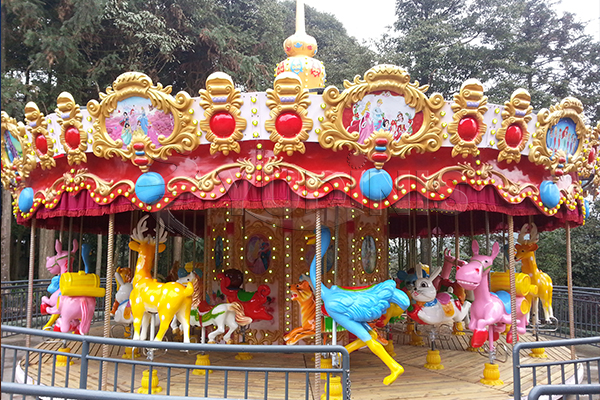
Hold guests in a pre-boarding area behind a gate, then release them together when the ride stops. This single change lets attendants control the flow and prevents the platform from filling unpredictably. Families should be directed to adjacent horses or carriages rather than choosing freely, which is where most of the boarding time is lost. Larger models, such as a double decker carousel for parks, benefit most from pre-boarding because two levels must load and unload safely.
Staff Positions and Signalling
Define where each attendant stands: one at the entrance, one on the platform, and, for double deck rides, one at the upper level access. Agree clear signals for “ready”, “start”, and “stop” so the operator never waits for confirmation. Training staff to work to a cycle time – for example, ninety seconds of loading – turns queue design into a measurable operating standard.
Queue Comfort and Perceived Waiting
Perceived waiting matters as much as actual waiting. Shade, seating, and a visible view of the ride make the queue feel shorter and reduce complaints during peak hours. Information about wait time and clear signage also prevent guests from leaving the line, which is a hidden source of lost revenue.
Measure and Adjust
Record cycle times at different hours and check how often loading exceeds the target. If the queue regularly backs up, add staff at boarding, adjust the gate layout, or move the ticket point. Small operational improvements, tested over a week, usually deliver more capacity than any change to the ride itself.
Queue design is the cheapest capacity upgrade available to a carousel operator: the ride stays the same while the number of guests served each hour rises. Work with an experienced carousel rides supplier China that provides layout guidance for boarding and exit areas, and review general carousel queue practice when planning guest flow. To discuss models and site layouts, visit https://www.carouselmanufacturer.com/product/outdoor-carousel-rides-for-sale/.
Leave a Reply