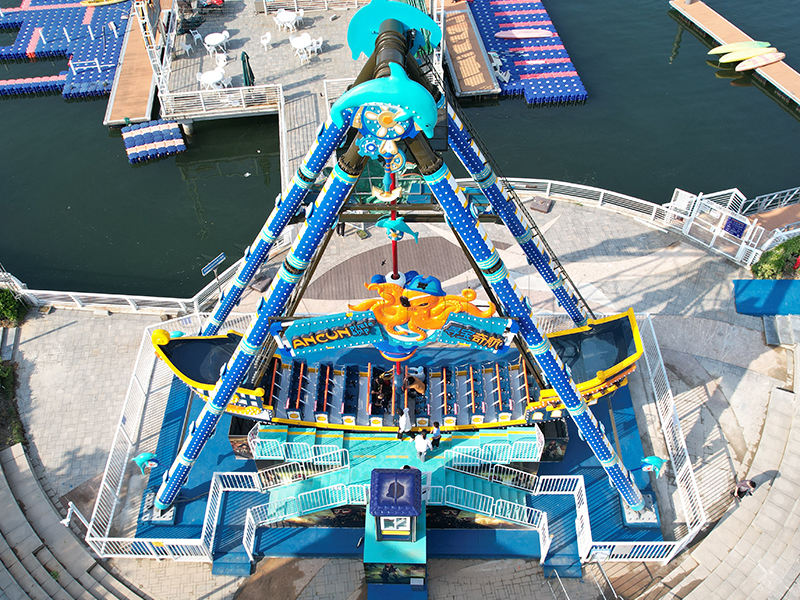
When you walk through a busy amusement park, few attractions stop crowds the way a swinging ship does. The steady arc, the rising screams, and the shared thrill make it one of the most reliable rides in the industry. For operators planning a new investment, the first question is usually not whether to buy one, but which version fits the venue best: a classic pirate ship with a traditional look, or an ocean themed pirate ship ride for sale that wraps the ride in a complete marine world. The right answer depends on your theme, your guest profile, your available space, and your budget. This guide compares the two options from an investor’s perspective, covering immersion, capacity, footprint, customization, and return on investment.
The Timeless Appeal of the Classic Pirate Ship
The classic pirate ship is one of the oldest and most recognized amusement rides in the world. Guests already understand how it works, which lowers the barrier to participation and keeps queue lines moving. Because the visual language of pirates is familiar, the ride blends easily into traditional carnival zones, European-style streets, and family-friendly park areas. Operators also value the classic version for its proven mechanical design, mature spare-parts market, and straightforward maintenance routines. For a park that wants a dependable crowd-pleaser with minimal theming risk, the classic swinging ship is a safe, bankable choice that has delivered for decades.
What the Ocean Theme Adds to the Ride Experience
The ocean themed swing ship takes the same proven swing mechanism and adds a layer of visual storytelling. Guests board a vessel surrounded by waves, sea creatures, and luminous LED details, which turns a simple ride cycle into an immersive experience. Coastal parks, water parks, resorts, and family entertainment centers can use this theme to reinforce their brand identity. If you want to differentiate your venue from competitors that all offer standard pirate boats, a custom sea-themed swing ship ride gives your marketing team a distinctive photo point and a natural reason for guests to share their experience on social media.
Capacity, Footprint, and Throughput Compared
Both versions are available in the same range of sizes, so the choice rarely comes down to capacity alone. DINIS offers 24, 32, 36, 40, and 70-seat configurations, with footprints from roughly 14 by 7 meters up to 22.2 by 12.6 meters. A 24-seat model suits compact plazas and family parks, while 40-seat and 70-seat versions handle the heavy traffic of landmark destinations. Before you decide, verify that your site can fit the full safety envelope, including the swing radius and clearance height. For a detailed look at a proven mid-size option, the 40-seat classic swinging ship ride is a good reference point for layout planning.
Customization, Theming, and Brand Identity
Both classic and ocean themed ships can be customized, but the ocean theme offers more room to express your park’s identity. You can integrate your logo and name on the hull, choose LED lighting effects, and select sea-themed graphics that range from playful cartoon waves to realistic marine decoration. The fiberglass-reinforced plastic used for the hull resists corrosion, which is a major advantage in coastal climates and outdoor parks exposed to sun and rain. Customization also protects your investment over time: a themed ride is harder to compare with competitors and easier to justify in ticket pricing.
Pricing and Return on Investment
Budget is where the two versions start to diverge. As a general reference, DINIS ocean themed pirate ship prices range from about $15,000 to $60,000 and beyond depending on capacity and customization, while classic versions sit in a similar but usually lower band because they require less theming work. From an ROI perspective, what matters more than the purchase price is the revenue per square meter, the ability to drive repeat visits, and the ride’s lifetime of around 12 years with proper maintenance. A well-placed themed ship in a high-traffic zone can recover its cost within the first two operating seasons and continue generating profit for the rest of its service life.
Which One Should You Choose?
If your park is traditional, family-oriented, or already uses classic carnival styling, the classic pirate ship is the lower-risk option with proven mass appeal. If your venue is a water park, coastal resort, or themed destination that competes on immersion and visual distinction, the ocean themed version is usually the better investment because it reinforces your brand and creates stronger social media value. Medium and large parks that serve mixed audiences often buy one of each across different zones, pairing a classic model in the family area with an ocean themed model near the water attractions.
For most operators, the decision comes down to positioning: the classic pirate ship is a proven workhorse, while the ocean themed version is a branded experience engine that can lift guest engagement and repeat visits. Either way, working with an experienced manufacturer such as Theme Park Projects ensures the ride meets international safety standards, and understanding the history of the pirate ship ride helps you explain its appeal to investors and staff alike. To compare specifications, pricing, and customization options for your site, visit https://themeparkprojects.com/ocean-themed-swing-ship-ride/ and request a tailored quote.
Leave a Reply